How To Change the World

0Z310QU0H4

“Everyone thinks of changing the world, but no one thinks of changing himself.” ~ Leo Nikolaevich Tolstoy


When we think about changing the world it seems….well, impossible.

I’d love to change the world, but isn’t the planet too big and aren’t there too many people in it? People who bring their own unique worldview into the mix. So many opinions, biases, prejudices…all the negative stuff that creates so much discord in life. How can one person possibly make a difference for the better?

Before you change the world, change yourself.

We can’t be accountable for other people, but we must take responsibility for ourselves. In doing so, we can make an impact by the example we set. 

I recently participated in a Kindness Challenge that prompted participants to focus on the goal of becoming kinder and more compassionate. Simply being more aware of myself and how I responded to those around me led me to act and react in better ways. Change yourself first and you change the world.

This helped illustrate Newton’s Law that states:

“For every action there is a reaction.”

Newton showed that force can only result from mutual interactions. Therefore, if we want to be a force for positive change, we must change and become a positive force! 

How can we do this? Everyday we’re faced with choices on how to respond to the people around us. If someone treats us badly, we’re likely to respond in a negative way. If, however, we respond in a totally unexpected (positive) way, two things happen:  

  1.  We get the other person’s attention long enough to…
  2. Get him or her thinking about why we responded in an unexpected way.

I‘ve come to believe that much of the poor communication between people is a result of a lack of awareness: about ourselves, the other person, and the circumstances surrounding the encounter. If we can prompt others to think first, instead of reacting, we’ll have accomplished the important first step. I’ve found it helpful to do the following:

  1. Be aware of how I’m feeling and take time to think before speaking/acting
  2. Consider what the other person is feeling and why (maybe they’re experiencing a rough point in their life, or have experienced bad things that are affecting their behavior.)
  3. Realize that other people have lived a different life and see things according to their upbringing, religion, ethnic backgrounds, and so forth.
  4. Exercise more patience and less judgmental thinking:  don’t take it personally, because it may have nothing to do with you and everything to do with something else (see #2 above.)
  5. Turn the other cheek and respond with kindness.

You’ve heard the expression that it’s usually people who deserve love the least, that need it the most. Chances are they haven’t had good leaders and examples in their own lives. They may have suffered abuse, negligence, or another injustice of some kind. Does that excuse bad behavior? No, but it helps us understand what drives that behavior and gives insight into dealing with it in a better way.

Ripples

Whatever the case may be, we have daily opportunities to induce changes in our families, workplaces, neighborhoods, and communities. Like the ripples that multiply outward from a small drop of water, we can create a similar cause and effect. 

We are facing tremendous problems in our world:  social, political, economic, environmental, and the list goes on. It will take a long time to make widespread positive change and we’ll never solve all the issues, but we have to start somewhere. Now is a good time and our own corner of the world is a good place. We have to be diligent in our efforts everyday and set an example for others. Some days we’ll succeed and some days we won’t. But we keep trying.

And that’s how you change the world.

“Example is not the main thing in influencing others. It is the only thing.” ~ Albert Schweitzer


This week’s focus is to think of someone who inspires you to be more kind.


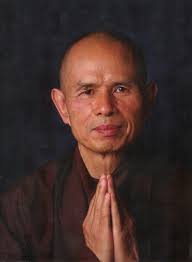
When I saw this instruction for week #6 of the Kindness Challenge, I didn’t have to think any further than Thich Nhat Hanh (for pronunciation click here.)

Thich Nat HahnThis Zen Master was introduced to me by a friend and I was immediately drawn to his gentle, quiet wisdom. While I have no great knowledge of Buddhism, he certainly inspires me to learn more. 
Thich Nhat Hanh is a Vietnamese monk, a renowned Zen master, a poet, and a peace activist. He was born in 1926 in central Vietnam and became a monk at the age of 16. He has devoted his life to spreading the message of mindful living. Nominated for the Nobel Prize by Martin Luther King, Jr., in 1967, he is the author of many books, including the best-selling The Miracle of Mindfulness. 

Thich’s approach has been to combine a variety of traditional Zen teachings with insights from other Mahayana Buddhist traditions, methods from Theravada Buddhism, and ideas from Western psychology to offer a modern light on meditation practice. 

He has also been a leader in the Engaged Buddhism movement (he coined the term), promoting the individual’s active role in creating change. 

On November 11, 2014, a month after his 89th birthday, and following several months of rapidly declining health, Thich suffered a severe stroke. Although he is unable to speak and is paralyzed on the right side, he continues to offer his peaceful, serene presence to his community. As much as his health allows, he participates in meditations, celebrations, and ceremonies.

For further biographical information click here.


While some of Thich’s pronunciations can be a bit hard to understand, just listening to him has a calming effect. He uses simple stories from his own life to illustrate the concepts of mindfulness and kindness. I found him to be a wonderful example of what it means to be compassionate to yourself and others. As I’ve said in recent posts, in order to show kindness to others you must be able to show it to yourself.

He explains how easily we get caught up in our busy lives and how this leads us to lives of distraction. He talks about living in the past and hanging on to regret, as well as worrying about the future. Both of these practices cause us to miss out on the present and the beauty of living. 

His teachings on mindful living illustrate how important the mind-body connection is to better living and better health.

The Art of Mindful Living is a great example of Thich’s skill as a story teller and a reassuring friend. If you need to escape the business of life and quiet your mind for a bit, give him a listen!

Kindness Challenge – Week #6


Kindness Challenge – Week #4

Our challenges for the first three weeks have been:  self-kindness, find kindness, and generate kind energy towards others.

Kindness June 7_2

Week #4 was to be kind by demonstrating some or all of the following:

  • Make eye contact and greet people around you
  • Hold the door for the person entering behind you
  • Compliment 5 people
  • Say “please” and “thank you” often
  • Address a stranger by their name (server, barista, cashier, janitor, etc.)
  • Take something special to your coworkers (bake a breakfast, offer snacks, etc.)
  • Leave a bowl of water out for stray animals
  • Make a few care bags for the homeless (mini toothpaste, toothbrush, hand wipes, lotion, tissues, chapstick, a bottle of water, soft snacks, etc.)
  • Be a listening ear for someone, listening in earnest and not just to reply
  • Mow a neighbor’s lawn
  • Give someone a handwritten note letting them know you appreciate them
  • Volunteer a couple of hours of your time to a cause you care about

I’m happy to say that I do some of these suggestions on an everyday basis. I always make eye contact, greet people, hold doors, say “please” and “thank you,” be a compassionate listener, and address strangers by their first name.

Unfortunately, I’m not employed yet, so I can’t take treats to work and with the concerns over a potential outbreak of the Zika virus here in Florida, standing water isn’t a good idea.

The rest of the ideas are good ones and I’m definitely going to  write some thank-you notes to a few select people that have supported me when I needed it most.

Some of my acts of kindness for the week consist of:

  • Turning the other cheek
  • Helping my son with some yard work
  • Making a small monetary donation to a local fundraiser
  • Giving someone the benefit of the doubt

It’s amazing how good it feels to do these acts of kindness, particularly the ones that require self-control over runaway emotions. I used to respond to other people’s inconsiderate behavior in a very negative way, but now I have a much greater level of self-awareness. I’m able to pause and think before I react, which is very empowering!

Kindness June 7_3

When it comes to helping someone there’s an immediate feeling of goodness. Just knowing that our time in this life is limited makes those moments all the more special. I remember the kindnesses shown to me by people who have passed on, particularly my dad and grandma. The memory of their many acts of love inspires me to do the same. I want my family and friends to remember me with a warm heart and a smile. 

Kindness serves a wonderful purpose while we’re living and makes a great legacy after we’re gone. 

What kind of legacy will you leave?

Kindness Challenge – Week #4