Gratitude Journal – Prompt #10

fingers-crossed

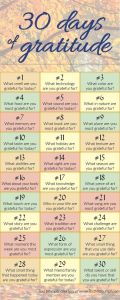
30 Days of GratitudeWhat taste are you grateful for today?

I feel inclined to use a metaphor for Day #10 in the 30 Days of Gratitude  prompts. The word “taste” implies the flavor of something perceived by the mouth or tongue (i.e.taste buds.) 

However, after carefully tracking Hurricane Matthew for several days and hearing that my family in Florida came through safely and with minimal damage, I’m grateful for the “taste of good luck.”

Is there such a thing? I’ve heard of the taste of success, so why not?

Many people rely on religion and prayer in the hope of achieving a desired result. Faith offers strength and sustenance to those who believe that all things happen for a reason. However, after reading When Bad Things Happen To Good People my views changed a bit. 
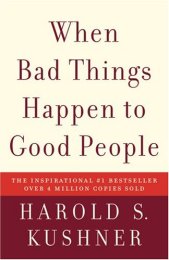
when-bad-things

This book was written in 1981 by the Conservative rabbi Harold Kushner and dedicated to his young son who died from progeria, an incurable genetic disease. In this book Kushner addresses the conundrum of why an omnipotent and loving God allows so much suffering in the world, particularly by good and decent people.

His answer to this philosophical question is that God does his best and is with us through our suffering, but isn’t fully able to prevent it. 

And that’s where luck comes in.


Now, I realize that many people of faith won’t accept this analysis. But, it brought great comfort to me in 1983, at a time when I doubted God’s love. Yes, the book questions his omnipotence, but offers an explanation that makes total sense to me. In exchange for absolute control, he offers us free will, to make wise choices and repudiate sin. And sometimes, bad things are simply random events that do happen to good people.

God doesn’t pass out x number of malignant tumors each month or hand pick certain children to die in a bus crash, while others survive. He waits alongside us, to support and lift us in our times of grief and despair. That’s a God I can believe in.

While I’m grateful that my own family came through safely, my heart aches for the people in Haiti and the other Caribbean countries. They live in poverty on their best days. The devastation that they’re facing is unimaginable and the death toll is over 300. Here in the States, 32 people died and property damage is estimated at $6 billion.

In an effort to show my gratitude for the minimal effects Hurricane Matthew had on my loved ones, I’m going to donate something for those suffering the greatest. I can’t give as much as some people, but I can give something

Let’s all think about what taste we’re grateful for today and if you’d like to help the victims of Hurricane Matthew, you can donate here.

Carpe diem!


Gratitude Journal – Prompt #4

food

Photo credit: Krzysztof Puszczynski/StockSnap.io


Day #4 – What food are you most grateful for?

30 Days of Gratitude

The answer to Day 4 of  the 30 Days of Gratitude Prompts is whatever food that I happen to be eating, at any given time. In other words, I’m grateful for all the food that I’m blessed to have!

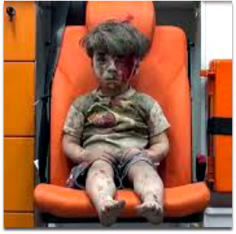
So many people in our world go without a proper diet, let alone those who are starving. We see these tragic faces on the news reports, as well as in our own neighborhoods. 

It’s incomprehensible that in a world as advanced as ours, there are still people who go without the basic necessities of life. When we see the excess lifestyles of the “rich and famous,” we’re reminded of the vast inequities that exist. 

Yes, there are those people who make bad choices and end up addicted and dependent on the government. But, not all these folks are responsible for their dire straits. Some are victims of terrible circumstances beyond their control, like former veterans, displaced workers, and people with devastating illnesses. We also have a serious mental health crisis that further adds to the problem. As a society, we have a huge amount of work to do in order to alleviate these problems. 

syrian-boy_r

Then there are the countries whose leaders don’t care about the quality of life of their citizens. The most brutal of these are actually responsible for the torture and killing of their own people.

I believe we have a responsibility to be aware of who needs help and do what we can. This could mean donating money or food items to organizations that work to end hunger and poverty. It could mean volunteering for a local food bank or the various events held to raise money.

A good place to start is the Federal Trade Commission Consumer Information. This website offers advice on how to avoid charity scams and what to check before making any type of donation.

With Thanksgiving and Christmas just a few months away, the Salvation Army bell ringers and other charitable groups will be out in force. Feeding the hungry and caring for the less fortunate is the message of the season. 

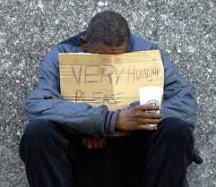
homelessness

As we hurry about shopping for our groceries and Christmas gifts, I would urge everyone to be mindful of those living a life of poverty. Rather than judge them without knowing their back story, perhaps we can simply offer them a hot meal or help in the soup kitchen. I don’t have much to give, but I give what I can.

And by doing so, my own foods tastes a whole lot better! 

Carpe diem!


How To Change the World

0Z310QU0H4

“Everyone thinks of changing the world, but no one thinks of changing himself.” ~ Leo Nikolaevich Tolstoy


When we think about changing the world it seems….well, impossible.

I’d love to change the world, but isn’t the planet too big and aren’t there too many people in it? People who bring their own unique worldview into the mix. So many opinions, biases, prejudices…all the negative stuff that creates so much discord in life. How can one person possibly make a difference for the better?

Before you change the world, change yourself.

We can’t be accountable for other people, but we must take responsibility for ourselves. In doing so, we can make an impact by the example we set. 

I recently participated in a Kindness Challenge that prompted participants to focus on the goal of becoming kinder and more compassionate. Simply being more aware of myself and how I responded to those around me led me to act and react in better ways. Change yourself first and you change the world.

This helped illustrate Newton’s Law that states:

“For every action there is a reaction.”

Newton showed that force can only result from mutual interactions. Therefore, if we want to be a force for positive change, we must change and become a positive force! 

How can we do this? Everyday we’re faced with choices on how to respond to the people around us. If someone treats us badly, we’re likely to respond in a negative way. If, however, we respond in a totally unexpected (positive) way, two things happen:  

  1.  We get the other person’s attention long enough to…
  2. Get him or her thinking about why we responded in an unexpected way.

I‘ve come to believe that much of the poor communication between people is a result of a lack of awareness: about ourselves, the other person, and the circumstances surrounding the encounter. If we can prompt others to think first, instead of reacting, we’ll have accomplished the important first step. I’ve found it helpful to do the following:

  1. Be aware of how I’m feeling and take time to think before speaking/acting
  2. Consider what the other person is feeling and why (maybe they’re experiencing a rough point in their life, or have experienced bad things that are affecting their behavior.)
  3. Realize that other people have lived a different life and see things according to their upbringing, religion, ethnic backgrounds, and so forth.
  4. Exercise more patience and less judgmental thinking:  don’t take it personally, because it may have nothing to do with you and everything to do with something else (see #2 above.)
  5. Turn the other cheek and respond with kindness.

You’ve heard the expression that it’s usually people who deserve love the least, that need it the most. Chances are they haven’t had good leaders and examples in their own lives. They may have suffered abuse, negligence, or another injustice of some kind. Does that excuse bad behavior? No, but it helps us understand what drives that behavior and gives insight into dealing with it in a better way.

Ripples

Whatever the case may be, we have daily opportunities to induce changes in our families, workplaces, neighborhoods, and communities. Like the ripples that multiply outward from a small drop of water, we can create a similar cause and effect. 

We are facing tremendous problems in our world:  social, political, economic, environmental, and the list goes on. It will take a long time to make widespread positive change and we’ll never solve all the issues, but we have to start somewhere. Now is a good time and our own corner of the world is a good place. We have to be diligent in our efforts everyday and set an example for others. Some days we’ll succeed and some days we won’t. But we keep trying.

And that’s how you change the world.

“Example is not the main thing in influencing others. It is the only thing.” ~ Albert Schweitzer