How To Discover Who You Really Are

Greek MasksREV

“The unexamined life is not worth living.”


So said Socrates, when he was on trial for his life.

His crimes? Not recognizing the gods of the state, inventing new deities, and corrupting the youth of Athens.

Times sure have changed, right?

This Classical Greek philosopher was known for having a way with words…and questions. He developed what came to be known as the Socratic method; a form of inquiry and discussion used to stimulate critical thinking and illuminate ideas.
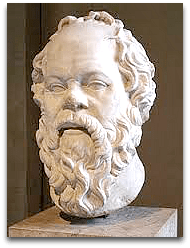
Bust of Socrates

The process works like this:  a discussion is held between two parties where one side questions the other regarding a commonly held belief, in an attempt to refute said belief.

It is a method of hypothesis elimination, in that better ones are found by identifying and eliminating those that lead to the contradiction.

Socrates believed that all human choice is motivated by the desire for happiness and that ultimate wisdom comes from really knowing oneself.

He concluded that the better people know themselves the more likely they are to make good decisions. And thus be happy. 

As a philosopher, Socrates went about the city of Athens and engaged people of all classes in political and ethical debates. His goal was to determine the truth and he never proposed to know what that was. In fact, he claimed to be ignorant of not having answers, but wise because he recognized his own ignorance.

Some people admired him, but others felt threatened by his constant challenges to the government and the conventional wisdom of the day. His defiance eventually led to execution.

Plato later described Socrates as a “social gadfly,” someone who upsets the status quo with persistent questions in order to challenge a popular position or belief.

The biographical information of Socrates is limited. What is available was only recorded by his students, which included Plato. Despite this, his Socratic method became the foundation for Western systems of logic and philosophy.


I’ve come to believe that we do ourselves a great injustice by not questioning our own status quo.

We grow up with a world view largely formed by our families of origin. Our sense of self is also a direct result of the collective experiences of our childhood and adolescence.

But do most people question their belief systems or why they think like they do?

Not often. To do so is to question family, culture, religion, and society at large.

Looking back, I wish I had spent more time in self-reflection and preparing for my future. “Eat, drink, and be merry” was my raison d’etre.  I was in my 40s before I took a hard look at the choices I made and, more importantly, questioned why I made them.

Some of those choices were pretty bad:  I dropped out of college after one semester, then partied like crazy for almost six years, and stayed in an unhappy marriage for two decades.

It was only after leaving that relationship that I finally “woke up.”  Living with someone who has an addiction can do a lot of damage. For me, that meant isolation and building a wall to keep out the pain.

Cement wall with barbed wireThe problem with walls is they keep out everything, including joy.

For many years I operated on auto-pilot, without feeling much of anything. My children were my redemption; the only real source of happiness. But, I was out of touch with so many emotions and my spirit felt crushed.

Once I left the marriage I found a counselor who helped me formulate tough questions that I needed to ask myself and then to look within for the answers.

Just as Socrates believed that truly knowing oneself would lead to good choices, I was forced to acknowledge uncomfortable truths about myself and others. It didn’t happen overnight, but eventually, I started to heal. And I started making better choices.


What a difference it made in every area of my life. I began to have an awareness of myself and the world around me that didn’t exist before.

I remember walking out of the grocery store and being startled by an amazing sunset. Whether I was dining in or out, the food smelled and tasted better. Music evoked emotions like never before. 

My thinking was much clearer. I became less reactive and more thoughtful. I was able to put myself in the other guy’s shoes and see a different perspective. I became more patient.

I was also able to recognize bullshit and no longer afraid call it out. I knew what would make me happy and finally believed I deserved it.


It’s easy to lose an honest perspective if we’re not diligent.

To go through life accepting certain things about ourselves and others without questioning whether those beliefs are valid.

To Thine Own Self Be True

We need to think critically about the messages we received growing up and decide if those messages are true. We must be honest about the limitations of others, as well as ourselves.

Children learn what they live. It’s important to remember that the people who influenced our lives were influenced by others. What was their experience growing up and how did that influence the people they came to be? 

The Nature vs Nurture debate is ongoing, but we’re obviously influenced by the people who raise us. Our teenage experiences play a big role, also. That means we’re impacted by friends, teachers, coaches, babysitters, clergy, and just about everyone we encounter.

They help shape us and deserve careful scrutiny. Not for the purpose of blame, but for enlightenment. 

If we’ve been affected by another’s negative actions or bias we should be mindful of that. It is possible to change how we think about other people and the world.


Do you experience ongoing conflicts in relationships with those closest to you? Are you having a tough time getting along with a boss or coworker? 

Maybe you get angry too quickly or allow yourself to be a doormat for others.

If so, you’re not alone. Most of us experience difficulties at some point. It’s important to remember that you’re 50% of any relationship you have. While you can’t control the actions of others, you are responsible for your own.

The good news is that positive change and growth are possible!

The takeaway here is that without a thorough examination of yourself, you’ll never truly understand why you think, feel, and respond in the ways that you do. You might never discover your full potential or the real, unadulterated you.

Reading more about the family of origin issues can help you decide if therapy is an appropriate option.

Understanding what motivates you to think and act in particular ways provides insight into how to make positive change and improve those communication skills.

 I know this first hand and agree wholeheartedly with Socrates; that kind of life isn’t worth living when the alternative is so much better.
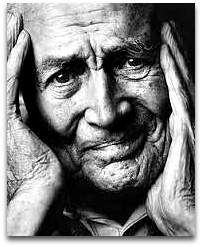

 

How To Better Understand A Loved One With Alzheimer’s

NOTE:  I wrote this after viewing the Edge of Humanity Magazine’s post on March 6. The title is The Faces of Alzheimer’s Disease, a contribution of portrait photography by Alex ten Napel. Please take a few moments to view the images here.


Alzheimers FaceREV

If you’ve ever spent time in an Alzheimer’s/Dementia unit then these faces should look familiar. 

Not the individuals themselves, but their expressions and the moods they reflect. These faces range from thoughtful and smiling to frustrated and expressionless. They’re like the ones we all display at various times. 

The difference is that ours are prompted by clear thoughts and emotions, triggered by specific circumstances. An Alzheimer’s patient often can’t account for what they’re thinking and feeling at any given moment. 

The folks looking thoughtful may actually be unable to focus, their minds overrun with many simultaneous thoughts. They quietly struggle to locate memories or ideas.

Those who are smiling with amusement sometimes do so for no apparent reason. At times they’ll burst into giddy laughter as if they’re privy to some joke that no one else knows.

Then there are the angry, frustrated episodes as the patient lashes out with rage and profanity at everyone around them.

A blank stare can indicate that the person has momentarily disappeared deeper into the fog that is gradually taking over their conscious mind.

The unpredictability of these mood swings is unnerving for family and friends who are slowly watching their loved one slip away.


Alzheimer’s is a progressive, neurodegenerative disease that destroys healthy brain cells. The symptoms worsen over time and a person can suffer with it from four to eight years on average. Depending on the circumstances, life expectancy may last up to twenty years after diagnosis. 

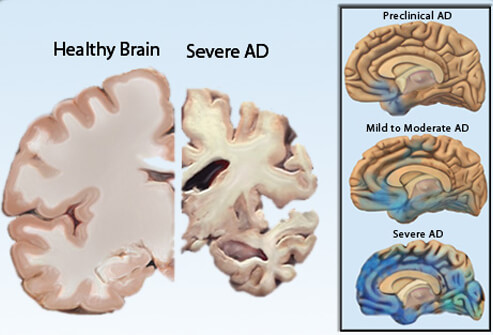
ChangeChanges in the brain begin to occur years before any symptoms present themselves. This is referred to as the “preclinical” period. 
Looking back, I recall times when my dad behaved oddly or had difficulty doing a task that he’d done a hundred times before.

He took medications for high blood pressure, cholesterol, and diabetes, but we weren’t aware of the changes occurring in his brain.

I don’t know if the doctors warned him about dementia as a possible outcome of his other conditions. If they did he chose not to share that information with our family.


Three Stages of Alzheimer’s:

Mild (Early Stage) 

In the earliest stages of the disease, the person is still able to function independently. They continue their normal routines with only slight lapses of memory and minor confusion. There can be physical signs, as well. Family members may begin to notice these difficulties. A trained physician can detect problems with concentration and memory through a detailed exam. Likewise, physical exams often expose changes in gait and balance.

Moderate (Middle Stage) 

This is the stage that typically lasts the longest, sometimes for years. Symptoms, both mental and physical, become much more obvious and the loved one requires a greater level of care. The confusion and disorientation that begins in the middle stage influences the person’s perception of reality.

They also experience communication problems. At times they have difficulty expressing their thoughts and feelings and can’t understand what others are saying. They struggle to remember the meanings of words. This level of disorientation creates fear, anger, and embarrassment.

Severe (Late Stage) 

Patients in this stage require full-time assistance with daily activities and personal care. They have difficulty communicating and lose awareness of their surroundings. They no longer recognize familiar faces. Their physical condition worsens along with their mental state.

It’s important to become familiar with these stages so that caretakers can understand what the patient is experiencing.

Alzheimer Brain

Despite the ongoing challenges, there are strategies available to handle these problems. Marie Marley has authored two books and numerous articles on ways to deal with the behavioral issues of dementia patients. In the past, she has focused specifically on the very difficult job of being a caretaker.

However, after reading The Best Friends Approach to Alzheimer’s Care Marley realized that she’d never considered how the patient feels. The book, written by Virginia Bell and David Troxel, explains it in a way that the reader can experience those feelings. 

In Marley’s post, she gives an example from the book that really drives this point home. The authors remind the reader of how it felt to be called on in class and not know the correct answer. Then they point out that life for an Alzheimer’s patient is living in that classroom every day and never having the correct answer. 

 Education is the key to understanding how the illness affects the patient both mentally and physically, and how to manage their care more effectively.


The  Alzheimer’s Association is an excellent starting point for your research. They are the leading voluntary health organization committed to caring, support, and research for Alzheimer’s/Dementia patients and their families.

Because there is no cure, Alzheimer’s eventually renders the person completely dependent and powerless.

But, knowledge is power and being able to provide compassionate and informed care is something that benefits both patient and caretaker.

It is also the best and final gift we can offer our loved one.


What Makes a Great Gift Even Better?

gift-flowerr

Photo: unsplash.com

It’s better to give than receive, according to the Bible. But, that really depends on how much thought we’ve put into giving.

I’ve gotten pretty lazy over the years.

When I was younger I invested a great deal of thought and energy into gift-giving. The brainstorming began well in advance of the occasion; the Christmas lists got started right after Halloween.

 When thinking about the recipient, I asked myself the following:

  • Do they have any hobbies
  • What are their clothing preferences
  • Do they enjoy books, movies, both, or not at all
  • What is their favorite cologne or personal care item
  • What do they normally spend their own money on
  • What do they need

If I required more inspiration I’d flip through various catalogs. Remember those?

Can you imagine being a postal carrier when the J.C. Penney Spring/Summer edition came out? No need to hit the gym after delivering those hefty tomes!

Then came the shopping, which involved leaving the house. Yes, we could do mail orders either by phone or snail mail, but the latter could take up to three weeks. In those days Amazon was a river in South America and prime was a type of number.

gift-wrap

Photo: pixabay.com

Once the purchase was made the next step was packaging. It was important to choose the appropriate gift wrap and coordinating bow. If Mom hates cats you don’t wrap her gift in kitty paper.

Then came card shopping, which could easily take an hour. I love reading them. If you lose me in a store that has a card section just head over there. That’s where you’ll find me, usually giggling hysterically. 

Nowadays, things are much different. I generally give gift cards to a business or restaurant that the person patronizes. Somehow, it doesn’t seem quite as effortless (i.e. lazy) as writing a check. 

It’s then tucked into a greeting card which was chosen within five minutes.

Bada-boom, all done.


So, why the drastic change in mindset? Is this a sign of aging, gift fatigue, or both?

Feeling guilty about my cavalier attitude, I decided to make some changes. After a bit of research I concluded the following:

Forget the “Wow” factor

When selecting gifts you may want to achieve a big reveal moment. This occurs when the recipient expresses a dramatic reaction, usually a result of your spending too much money.

One long-ago Christmas I came across a toy that so impressed me I just had to order it for my kids. It was unaffordable and last-minute, so I also paid extra for expedited shipping. I was convinced they would be thrilled. Their reaction to it was equal to the $20 presents under the tree. I basically spent $100 to “wow” myself.

The lesson here is to think long-term, don’t assume they’ll like it just because you do, and stay within your budget.

Don’t surprise them

In addition to the wow factor, you may want to surprise them, as well. This often involves purchasing something totally unexpected and that can backfire. Their only surprise might be your odd choice in gifts. It’s safer to give something that was requested and add the element of surprise with an upgrade. (Or an add-on gift like one of those cans where the snake pops out.)

A good idea goes a long way

It’s okay to give everyone the same present. You don’t have to buy something different for each person. A new, exciting idea is new and exciting for everybody. Plus, you can always individualize the wrapping paper and bows!

There’s no shame in regifting

If you receive a bottle of Cabernet and hate Cabernet, I’ll be thrilled to receive it. No questions asked. (BTW…my birthday is coming up in March…)

Rack of gift cards

Photo: pixabay.com

Don’t decide for them

Sometimes the best gifts are the ones we give ourselves. Give your loved one the gift of choice via a gift card and let them decide. Just be sure the gift certificate/card is to a store or business they actually shop at. 

It’s also helpful to think in the short-term. Gift cards can be forgotten if not used right away. So, think about the person’s current desires. A college student needs textbooks; a crafter needs crafting supplies; a wine drinker needs wine (Cabernet…in March.)


A  Journal of Consumer Research study found that while givers rate gifts on desirability, recipients rate them on feasibility.

Givers focus more on sentiment and less on practicality. Receivers would rather get items they want or need. 

We devote a considerable amount of time and money throughout the year for birthdays, anniversaries, weddings, showers, graduations, and Christmas. 

Therefore, while you might have an idea for a great gift, the tips above could make it better…and easier!