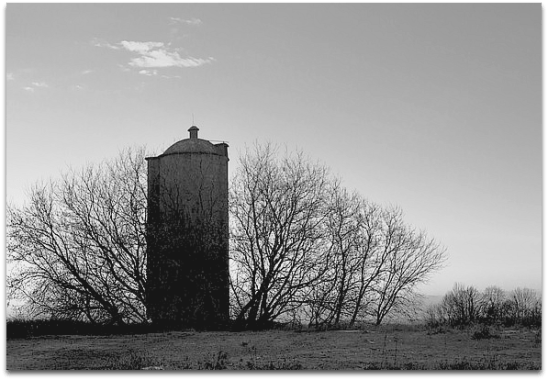
3 Important Reasons Not To Be “Siloed”

Silo


You remember the silo, right?

Those tall cylindrical structures you’d see on a farm, sometimes standing next to the barn.

As a kid, I remember drawing pictures of farms and always including the silo. We learned that grain was kept there and I thought it was pretty cool; so tall and skinny. Until a classmate talked about what would happen if you fell in one. 

Childrens' drawing of red barn & siloThe thought scared me. It seemed like the equivalent of falling in a well, only you wouldn’t be underground. Still, it could be a long drop (depending on how much grain was in there) and it would be really dark.

But, like so many other words, silo has taken on a new definition. I was unaware of this until reading an article last week where the author talked about a group of people being “siloed.”

I immediately opened a new tab and searched for the word. The cylindrical structure definition was there, along with several variations of the new one, which read:

silo/siloed – to isolate (one system, process, or department) from others.

It’s a business term and refers to how an organization is structured. 

Then I noticed silo mentality which refers to a mindset that occurs when certain departments don’t wish to share information with others in the same company.

I found this surprising because that attitude would certainly create problems within an organization. And, just as expected, it’s been determined that the silo mentality produces some negative effects. Below are the three reasons we shouldn’t allow ourselves to be siloed or to silo someone else.

Reason #1

The silo mentality can reduce the efficiency of the overall operation. Anytime communication breaks down there are bound to be problems. Whether it’s a corporation or a household, strong connections between the various members are vital to success.

Reason #2

Another ill effect is that morale goes downhill. People don’t appreciate being left in the dark. If it’s intentional that makes it even worse. When efficiency goes down  (See #1) everyone suffers.

Reason #3

If Reasons 1 & 2 go unchecked then the demise of a productive company culture is likely to occur. 

Imagine if this were a household where multiple family members stopped communicating:

  • Mom forgot to tell Dad that she needs him to pick up the kids from a soccer scrimmage because she has a hair appointment.
  • Dad forgets to tell Mom that he has a business dinner that evening.
  • The kids forget to tell their parents that the scrimmage was rescheduled at the competitor’s field.
  • Neither parent can pick up the kids, so they call Grandma at the last-minute. She rushes to the school only to find an empty field.

communicationREV

It doesn’t take long for systems to break down when people don’t share information. What would happen to society and all the organizations within it?

And what if governments operated this way? 

Why would anyone deliberately isolate themselves against other members of the same group?  Doesn’t this go against the concept of teamwork, a term borrowed from sports that became widely popular in business?

We see these situations with children and young people when they deliberately exclude other youngsters from their social activities.

I see this as a form of passive bullying. Remember all the siloing that went on in school? I hated when this happened to classmates and tried to reach out and be extra nice to those kids being targeted.

Sadly, it occurs with adults, as well. 

Don’t we have enough walls and barriers in our world?

The thought of falling into a silo still scares me. Being isolated from others and kept in the dark, whether literally or figuratively, doesn’t sound like a whole lot of fun.

I believe there’s strength in numbers, which is why I’ll stick with the barn. It’s big enough for everyone!


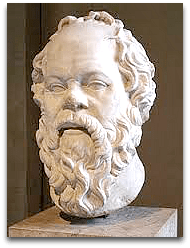


Photo Finish Friday

Scale Observation.png

Aerial photo taken from the observation deck of the Empire State Building in NYC. This shot has always reminded me of something else. Can you guess what it is?


How To Discover Who You Really Are

Greek MasksREV

“The unexamined life is not worth living.”


So said Socrates, when he was on trial for his life.

His crimes? Not recognizing the gods of the state, inventing new deities, and corrupting the youth of Athens.

Times sure have changed, right?

This Classical Greek philosopher was known for having a way with words…and questions. He developed what came to be known as the Socratic method; a form of inquiry and discussion used to stimulate critical thinking and illuminate ideas.

Bust of Socrates

The process works like this:  a discussion is held between two parties where one side questions the other regarding a commonly held belief, in an attempt to refute said belief.

It is a method of hypothesis elimination, in that better ones are found by identifying and eliminating those that lead to the contradiction.

Socrates believed that all human choice is motivated by the desire for happiness and that ultimate wisdom comes from really knowing oneself.

He concluded that the better people know themselves the more likely they are to make good decisions. And thus be happy. 

As a philosopher, Socrates went about the city of Athens and engaged people of all classes in political and ethical debates. His goal was to determine the truth and he never proposed to know what that was. In fact, he claimed to be ignorant of not having answers, but wise because he recognized his own ignorance.

Some people admired him, but others felt threatened by his constant challenges to the government and the conventional wisdom of the day. His defiance eventually led to execution.

Plato later described Socrates as a “social gadfly,” someone who upsets the status quo with persistent questions in order to challenge a popular position or belief.

The biographical information of Socrates is limited. What is available was only recorded by his students, which included Plato. Despite this, his Socratic method became the foundation for Western systems of logic and philosophy.


I’ve come to believe that we do ourselves a great injustice by not questioning our own status quo.

We grow up with a world view largely formed by our families of origin. Our sense of self is also a direct result of the collective experiences of our childhood and adolescence.

But do most people question their belief systems or why they think like they do?

Not often. To do so is to question family, culture, religion, and society at large.

Looking back, I wish I had spent more time in self-reflection and preparing for my future. “Eat, drink, and be merry” was my raison d’etre.  I was in my 40s before I took a hard look at the choices I made and, more importantly, questioned why I made them.

Some of those choices were pretty bad:  I dropped out of college after one semester, then partied like crazy for almost six years, and stayed in an unhappy marriage for two decades.

It was only after leaving that relationship that I finally “woke up.”  Living with someone who has an addiction can do a lot of damage. For me, that meant isolation and building a wall to keep out the pain.

Cement wall with barbed wireThe problem with walls is they keep out everything, including joy.

For many years I operated on auto-pilot, without feeling much of anything. My children were my redemption; the only real source of happiness. But, I was out of touch with so many emotions and my spirit felt crushed.

Once I left the marriage I found a counselor who helped me formulate tough questions that I needed to ask myself and then to look within for the answers.

Just as Socrates believed that truly knowing oneself would lead to good choices, I was forced to acknowledge uncomfortable truths about myself and others. It didn’t happen overnight, but eventually, I started to heal. And I started making better choices.


What a difference it made in every area of my life. I began to have an awareness of myself and the world around me that didn’t exist before.

I remember walking out of the grocery store and being startled by an amazing sunset. Whether I was dining in or out, the food smelled and tasted better. Music evoked emotions like never before. 

My thinking was much clearer. I became less reactive and more thoughtful. I was able to put myself in the other guy’s shoes and see a different perspective. I became more patient.

I was also able to recognize bullshit and no longer afraid call it out. I knew what would make me happy and finally believed I deserved it.


It’s easy to lose an honest perspective if we’re not diligent.

To go through life accepting certain things about ourselves and others without questioning whether those beliefs are valid.

To Thine Own Self Be True

We need to think critically about the messages we received growing up and decide if those messages are true. We must be honest about the limitations of others, as well as ourselves.

Children learn what they live. It’s important to remember that the people who influenced our lives were influenced by others. What was their experience growing up and how did that influence the people they came to be? 

The Nature vs Nurture debate is ongoing, but we’re obviously influenced by the people who raise us. Our teenage experiences play a big role, also. That means we’re impacted by friends, teachers, coaches, babysitters, clergy, and just about everyone we encounter.

They help shape us and deserve careful scrutiny. Not for the purpose of blame, but for enlightenment. 

If we’ve been affected by another’s negative actions or bias we should be mindful of that. It is possible to change how we think about other people and the world.


Do you experience ongoing conflicts in relationships with those closest to you? Are you having a tough time getting along with a boss or coworker? 

Maybe you get angry too quickly or allow yourself to be a doormat for others.

If so, you’re not alone. Most of us experience difficulties at some point. It’s important to remember that you’re 50% of any relationship you have. While you can’t control the actions of others, you are responsible for your own.

The good news is that positive change and growth are possible!

The takeaway here is that without a thorough examination of yourself, you’ll never truly understand why you think, feel, and respond in the ways that you do. You might never discover your full potential or the real, unadulterated you.

Reading more about the family of origin issues can help you decide if therapy is an appropriate option.

Understanding what motivates you to think and act in particular ways provides insight into how to make positive change and improve those communication skills.

 I know this first hand and agree wholeheartedly with Socrates; that kind of life isn’t worth living when the alternative is so much better.