Mindful Living

0ZOP6LIW5A

What exactly is “mindful living” and how can it improve the quality of our lives?

During the Kindness Challenge  I wrote about zen master and peace activist Thich Nhat Hahn, the Vietnamese Buddhist monk that spent his life teaching the art of mindful living. 

He points out that the capacity to enjoy peace matters more than simply having the peace itself. Peace takes many forms, occurs daily, and comes to us through the senses:

  • the sight of a loved one after an extended separation
  • the sound of a melody that stirs an old memory
  • the scent of freshly brewed coffee when we wake up in the morning
  • the taste of our favorite dish after a long workday
  • the feel of cool sheets on a warm summer night

Most of the time they’re small things, but there are so many. If we’re not conscious of them, how can we possibly appreciate them?
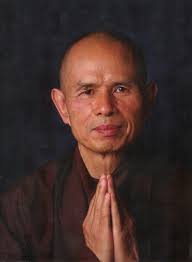
Thich Nat Hahn

Thich teaches that the practice of meditation and mindful living enables us to have that capacity. We are better able to recognize the beauty that surround us everyday. If we don’t live mindfully we become easily distracted and miss the joyful opportunities in our lives.

He illustrates this point with the story of the “non-toothache.” Most days we wake up without the pain of a toothache (or some other ailment) and that’s a wonderful thing. However, we don’t realize it’s a wonderful thing until we wake up with a toothache. Only then do we understand how lucky we’ve been; enjoying good health for all those other days. We’re reminded that NOT having a toothache is pretty great! Having good health is a true gift, yet we don’t acknowledge it very often. Like so many things, we take it for granted.


So, how do we enjoy peace in the present moment?

Thich instructs us to begin with the sutra (text/scripture) of conscious breathing. This simple exercise consists of breathing in and breathing out. Inhale, exhale. 

He tells us that saying or calling something by its name is an important part of mindfulness and makes that particular thing become more real. This aids in concentration and helps focus our attention on breathing and off other things. Thich advises us to silently say “in” and “out” as we breathe in and out.

This act of conscious breathing stops our thinking and gives the mind a rest (and who doesn’t need that a few times a day?) We have a tendency to immerse ourselves in the daily distractions and forget the blessings that we enjoy. Except that we forget to enjoy them. 

“Thinking is often less than breathing.” ~ Thich Nhat Hahn


I was prompted to write this post after receiving some troubling news from home. We all face occasional problems and unhappiness in our lives. Some people deal with far more than others. Often, these issues concern our past. Whatever the case, it’s easy to get caught up in the anxiety of the moment. We become preoccupied with the issue and that can magnify the negative aspects, as well as our angst.

Mindful

When we become overwhelmed with our sorrows we catastrophize and lose our focus. The molehill quickly becomes a mountain. We can no longer see the goodness that surrounds us.

Thich reminds us that we have the seeds of joy in us; planted many years ago as children. If we don’t practice mindful living, we lose touch with these seeds. 

Instead of thinking about what is wrong, we have to also consider what is NOT wrong. 

Mindful living helps us keep things in a realistic perspective. Reality is easier to deal with compared to the overblown phantoms we create in our minds. Try the conscious breathing exercise; it will give your mind a break and help you see the whole picture, not just a small section. 



The Tonys Tribute


In case you missed this heartfelt speech…


2016 Kindness Challenge – Week 5

Heart in Sand_Final

I was in the midst of putting my post together yesterday morning for Week #5 of the Kindness Challenge, when I heard about the Orlando tragedy. Obviously, I switched gears and spent much of the day on various news sites,  as well as Twitter and Facebook.

This nightmare followed on the Friday night shooting death of Christina Grimmie, a rising star who gained fame on the “Voice.” Needless to say, I’m having a tough time writing this in the aftermath of such hatred and destruction of innocent life.

The nightclub, where the horrific events unfolded in the early hours of Sunday morning, is only 13 miles from my daughter’s apartment, where I’m visiting this week. Not that location makes it any more or any less awful, but the closer it hits to home, the more you realize it can happen anywhere, at any time.


The focus of Week #5 has been to end our days with gratitude for the kindness we’ve experienced on that particular day.

Nikki put together a list of suggestions to help with this assignment. I chose the following three:

  • Make a list of all of the kind things that happened to you today
  • Keep a journal handy to write details of something kind you’d like to remember
  • Say a few words of thanks for the kindness you noticed in your day

Each night, after I shut off the light, I’ve reflected on that day’s events. This is easy, because it’s something I usually do anyway. I took extra notice of any kindnesses from that day and silently expressed appreciation for them.

My goal is to start an actual Gratitude Journal where I’ll record these thoughts on paper. However, my fear is that I won’t keep up with it consistently, like diet and exercise. So, I decided to take the pressure off and not implement any strict rules. I’ll pay attention to the blessings of the day and record them in whatever way works the best on that given night. Some nights I may go into greater detail with several paragraphs and other nights might be a quick “one-liner.” 

I believe these positive reflections right before bed have helped me sleep a bit better this week. I still wake up periodically through the night, thanks to menopause. Prior to that I slept like a log. But, it makes sense if you consider the endorphins released by the brain whenever we have happy thoughts. These “feel good” hormones do just that: help us feel better and more relaxed, so sleep should come more easily.

Last night was an exception. However, one of the things I felt grateful for was not being in the wrong place, at the wrong time. I believe that fate is a random thing and we’ve witnessed these events in a variety of venues: schools, churches, movie theaters, nightclubs, and others. Obviously, the gay community was targeted on Saturday night and some have been religious and politically based. Unfortunately, many of the other shootings had no motivation other than madness. There’s no way to predict where the next incident could occur.

To Thine Own Self


I also feel grateful that no one is targeting me for my beliefs and choices on how to live my life. My heart weeps for people who live under the threat of violence simply for the color of their skin, their choice of a significant other, their religion, and so on.


Kindness doesn’t stay with us as long as grief and anger do. People who suffer tragedies are likely to experience those negative effects for a long time and, in some cases, forever. We also tend to hang onto the mean things that people say and do to us. While we often forgive, we don’t usually forget. The positive effects of kindness pass more quickly from our memories. Consider the different ways that people show us kindness:

  • Generosity of time – Helping us with the cleaning, packing & moving to a new home, babysitting, petsitting, housesitting and other things that require the gift of their time.
  • Generosity of money and/or things – Giving us monetary help or gifts when we are in need or have an emergency.
  • Being courageous – Helping us face fear and the unknown, while feeling afraid themselves.
  • Patience/Turning the other cheek – Not holding a grudge when we treat them poorly.
  • Making sacrifices – When they give up things, so that we can have something extra.

 If I had recorded every kindness shown to me throughout my life, I would’ve filled many, many gratitude journals! 


The problem with being human is that we tend to take the good stuff for granted. That’s one of the goals of mindfulness: to focuse on the positive aspects of our lives and create a consistent awareness of those things as we go about our days.

Gratitude 2Being consistently aware of the kindness of others and the gratitude we feel because of that will create a more positive frame of mind as we face the ups and downs of life.

As hard as it is to do, we must learn to let go of the bad and forgive. Instead, we must embrace the good and commit it to memory (and our hearts.) 

In this way it can become a reserve of positivity to draw from when the darkness falls.

Kindness Challenge – Week #5