How To Turn Failure Into Strength and Success

Yellow and red darts on a board showing attempts at success

You always pass failure on your way to success. ~Mickey Rooney


Who among us hasn’t dealt with failure? No one, that’s who.

We’ve all felt the sting of losing or not accomplishing a goal that we set for ourselves. Sure, we also enjoy successes, but the road to achievement is often filled with more failed attempts than successful ones. 

I got to thinking about this while contemplating my new year resolutions. I always start off with great enthusiasm only to feel it waning a couple of months in. Why do I lose that initial fervor so quickly?

I’m inclined to think it’s because of my attitude about failure; I’ve always viewed it as a bad thing. After all, it IS the opposite of success. I also view anything less than reaching one’s goals as a failure. Therefore, if I don’t post regularly on my blog, then I’ve failed at writing. If I don’t avoid sweets then I’ve failed at eating healthier. And if I fail then I may as well give up, right?

Wrong.

Not everyone sees failure as a negative. During her June 2008 commencement speech at Harvard, J.K. Rowling talks about the “fringe benefits” of failure. In this insightful TED Talk she describes hitting the lowest point in her life and career: 

“Rock bottom became the solid foundation on which I rebuilt my life.”

J.K.Rowling Harvard Commencement address

Rowling points out that we all decide for ourselves what constitutes failure. Some people see falling short of a goal as ultimate defeat, while others view it as a challenge to be overcome. 

Because failure feels so lousy it’s a great teacher. When things come easily we often don’t have much invested, be it time, energy, or hard work. Failure may involve humiliation, rejection, or some other painful emotion, but one thing is certain: we don’t forget. Any lessons learned from the experience are scorched in our memory. Failure then becomes an effective means of learning.


There’s a lot of advice about how to turn failure into success. I boiled them down to what I believe are the basic three steps:

#1 – Acknowledge your humanity

No one is perfect or leads perfect lives.

Sometimes we forget this. Our society and media bombard us daily with news and views of athletes, entertainers, models, overnight millionaires, etc. that appear to be somewhat super-human. When we compare ourselves with them, it’s easy to feel like a mere mortal. Unless we read the back story of these folks we may never hear of their own struggles with failure.

Unrealistic expectations set us up to fail, which is why it’s so important to set achievable goals. No one’s perfect and it might require many attempts. This is where self-compassion comes in. Just as we graciously encourage our children and others to keep trying, we must do it for ourselves. If at first, you don’t succeed, try, try again. 

#2 – Don’t view failure as a negative 

View it as an “uncomfortable” opportunity.

No, failure doesn’t feel good, but it has value. It’s like going to the gym and working your ass off; sweating, being short of breath, smelling bad. Getting in shape isn’t much fun, but being in shape feels awesome. Failure becomes an unlikely means to an end that teaches important lessons about strength and endurance.

#3 Set realistic goals

A small success is better than no success.

Rather than trying to lose 25 lbs. make it 10. Instead of exercising an hour each day, do 30 minutes. As each goal is reached you’ll feel empowered to raise the bar.

And if you fall victim to cheesecake or life prevents your session at the gym, get back on the wagon asap. Losing a day or two doesn’t mean defeat; it’s a temporary delay towards a permanent goal.


Front cover of children's book The Little Engine That Could

I’m reminded of the popular children’s book The Little Engine That Could.

I bought it for my son before he started preschool and loved reading it to him. My hope was that it would teach the importance of hard work, belief in yourself, and not giving up.

Many years later, after applying to various law schools, he called to tell me that he had been accepted to the University of Virginia, one of his “top tier” choices and ranked in the top ten schools in the country. 

“I’ve realized my dream,” he said, his voice a bit shaky. My first thought was one of disbelief, then amazement and pride.

My second thought was of this book that I had read so often while he and his siblings were growing up. Without the benefit of being a minority student, legacy admission, or wealthy donor, he was accepted completely on his own merits.

The lesson of “I think I can” served him well. 


I believe failure is a stepping-stone to the best kind of success; the kind that’s earned.

Unlike the benefits of money and position that are merely handed over from one person to another, climbing the ladder of success has its own benefits. 

And slipping on a rung or two on the way up is one of them.


Old & New Opportunities For Changing Times

fullsizeoutput_7ba

“Approach the New Year with resolve to find the opportunities hidden in each new day.” ~Michael Josephson 


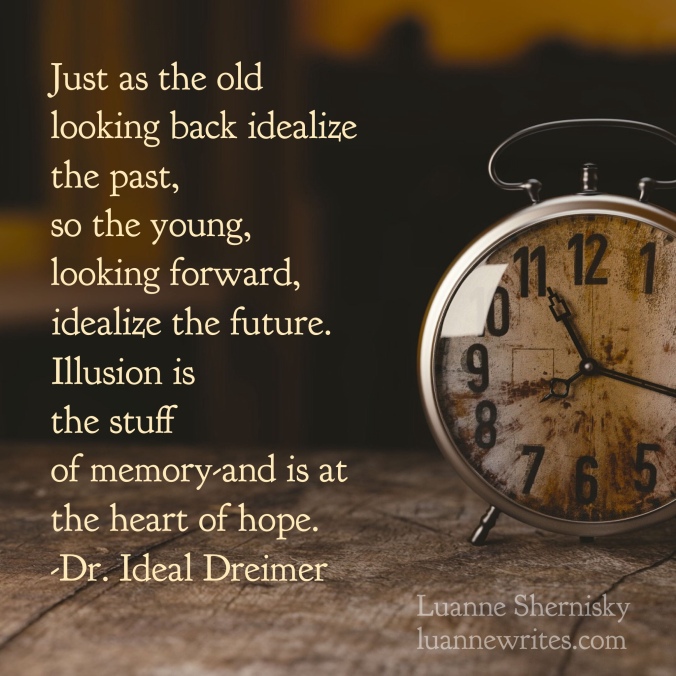
Opportunities to be kinder, wiser, and to make the world a better place for everyone. Make it more than an illusion; make it a reality.

Happy New Year!


What Happens When You’ve Lost That Writing Feeling?


That “writing feeling” didn’t disappear overnight.

I’ve always felt it and began this blog in 2015. Up until a few months ago, I’ve written pretty regularly. Then, there came moments of “I’ve got nothing today.” Those moments grew into hours, then days, then weeks. Not only didn’t I write anything, but I stopped reading the people I follow.

Instead of knuckling down and stringing actual words together, I’d opt for a Quote of the Day or an entry in one of the photo challenges. My initial goal wasn’t to write a blog post every single day, so these fillers (as I call them) are a way to share other things I enjoy and stay in regular touch with my readers. But, instead of filling in between posts they became the main content.

It’s not really writer’s block, which is the condition of being unable to think of what to write or how to proceed with writing.

Good Lord, anyone who reads the daily news, interacts on social media, or wakes up in the morning has a plethora of subjects to write about. Between our own personal lives and those of the rest of humanity, there’s a never-ending supply of writing prompts. All you need is an opinion.

How to proceed with writing is simple: pick a topic and start typing. Sure, it takes work to get your ideas down in a clear, cohesive fashion, but there’s no mystery about the process.


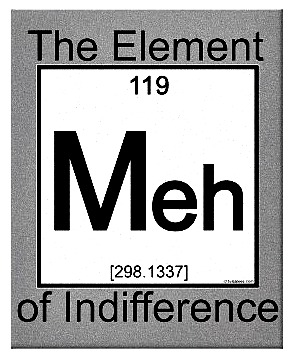
Indifference ElementREV

So, if not writer’s block, then what?

It feels more like writer’s apathy; an indifference to the writing process itself. And yes, this is a thing. When I Googled it several links came up. This one from Ginny Carter at BookBaby Blog offers 7 Remedies For Writer’s Apathy. 

It’s very similar to exercise and diet apathy, which I’m currently suffering from as well. The less you do it, the less you want to do it. 

Therefore, the resolution is to just do it. (Thanks, Nike and speaking of resolutions, the New Year is just around the corner.)

Accomplishing a goal is always easier said than done; however, it doesn’t answer the question as to why it happened in the first place. So, I did some reflection regarding these past few months and noted the following changes:

  • I started a new job
  • My mom went into a nursing home
  • I’ve become disillusioned with politics 
  • I’ve become disillusioned with people 

Looking at this list helps me understand why I feel so paralyzed in my indifference. I feel less hopeful about life in general. And when we lose hope, we lose our passion and energy. 


I decided to break it down into pros, cons & what, if anything, I can do about it. This is what I came up with:

PRO:  A new job brings time constraints, but offers opportunities for fresh writing ideas. Working with youth gives me a different perspective on life and I’m enjoying the change. It’s also offered better wages and a more positive work environment than what I did in the past and that’s a welcome improvement!

CON & RESOLUTION:  I’ve been through the nursing home experience with my Dad and it’s no fun, but I have insights that I didn’t before. I’ll be a better advocate for my mom. Fortunately, her situation is different and she feels more secure in her new living arrangements.

CON & RESOLUTION: While I don’t approve of the current administration, I can control how much of their messages I hear. Therefore, I’ve decided to limit my exposure to social media and disreputable news sites. I believe there’s a happy medium to staying informed without being sucked into the vitriol that thrives on those platforms. I can do things to advance my own ideas of fair government without giving in to cynicism and overdosing on hate and negativity.

Meme: I'm not an astronomer, but I'm sure the earth revolves around the sun and not you.

CON & RESOLUTION:  And people never fail to disappoint (not that I’m perfect.) However, I’ve always made an effort to understand the other guy’s POV. But, the total lack of respect and empathy that I see on display is mind-boggling. There are individuals who can’t step outside their own heads. Their mantra seems to be: “It’s my way or the highway.”

They honestly believe that their perceptions are everyone else’s reality.

There’s no self-reflection or accountability because most of these folks think they’re pretty darn perfect! No regard for the fact that there’s another side to every equation; that someone else may experience things differently. 

And this very thinking causes most of their misery and that of others.

Again, the best way to limit the ill effects of these individuals is to stay away from them. Whether they’re family members or online trolls, it’s best to keep a safe distance. 


I'm not afraid of storms for I'm learning to sail my ship with photo of dingy cresting a wave.So, I guess the answer is to always maintain a healthy balance when it comes to needs and expectations.

Recognizing negativity will prevent us from becoming invested in the wrong things. Instead, we can focus on the people and things that bring joy to our lives.

Just like a pilot or sailor adjusts their navigation in response to the wind and sea we must make adjustments for the changes that occur in life.

 And this should happen before the paralyzing apathy takes over.


Well, it appears that I’ve answered my question, started a New Year’s resolutions list, and written a blog post…talk about making up for lost time! 

I’m not the first person to experience a loss of artistic passion. If you have any helpful tips to prevent or resolve creative apathy please share in the comments.

Now that I’ve rediscovered the writing feeling, I better tackle that diet/exercise apathy next! 😉