How To Be Victorious in One Postive Step

Mountain_ManPLATO


Some of the toughest battles we fight are with ourselves.

Whether it’s having that second piece of pie or getting the last word in a disagreement, we often act impulsively instead of deliberately with careful thought.

Everyday life is filled with external stress that comes from our relationships, jobs and a multitude of other places. While it’s impossible to control these outside circumstances, we do have the power to control our attitudes about them.

I’ve written before about the need for self-reflection when it comes to building a better life and relationships. Understanding ourselves fully will explain why we react to certain people and situations in the ways that we do.

In turn, this understanding teaches us to harness automatic emotions and use careful thought and reasoning when making decisions. Foresight makes hindsight unnecessary.

But, where do these automatic emotions come from?

If a given experience or person causes us to have a negative reaction then we’ll associate the next similar experience with suspicion and distrust. Sometimes simply thinking about the person/experience is enough to trigger bad feelings. This is called generalization of learning and can reinforce the self-defeating behaviors that often result.  

However, we must consciously want to develop this skill and that requires changing how we think.

None of us is 100% right all the time. Our different worldviews and histories shape our opinions and beliefs. We certainly have our unique perceptions of things, but that doesn’t mean the other person is wrong.

It simply means that your experience and his/hers are different, as well as the impressions that go along with those experiences.


When we think of being victorious it’s usually in the context of winning a competition with someone else.

But, many hard-fought victories involve ourselves. Understanding our habit of viewing other people and ideas in a certain way will help us identify the areas we need to work on. 

If we remain rigid in our opinions and unwilling to listen to another’s POV, then we’re destined to remain stuck. No personal growth is possible.

But, why do people choose ignorance over enlightenment? I believe it’s due to familiarity and fear. We’re more comfortable with things that are familiar and we’re fearful of looking incompetent.

Stepping outside our comfort zone and being vulnerable requires a lot of courage. We want to feel safe and that’s more easily achieved in a familiar environment. Being vulnerable means admitting we’re “less than perfect.” 

Research professor Brene Brown warns that perfectionism shouldn’t be confused with self-improvement. In this interview with Forbes magazine she comments that healthy striving is self-focused: how can I improve. Perfectionism is other-focused: what will they think?

To be conquered by our own negativity and narrow-mindedness is truly a shame. It doesn’t have to be that way.

Conquering those demons requires honesty about our fears and failings, which is never easy. We must acknowledge our weaknesses and work to overcome them. Realizing that other people struggle with their own doubts and limitations can help us change our perspective. Once we’re able to see through a more neutral lens our feelings and attitudes will change for the better!




Seven Easy Ways To Spot Fake People

Fake ButterFake people are like fake butter. They may look like the real thing on the surface, but a closer inspection reveals that they don’t “taste” right.

Can you recognize it when you meet them? Being aware of what characteristics to look for will prevent both headaches and heartaches later on.

Do you sometimes feel like your own words and actions are less than genuine? Under certain circumstances we all say and do things that are less than truthful. (No, your butt doesn’t look huge in those leopard print, spandex pants that you love so much.)

But, there’s a difference between people who consistently put up a false front or lie and those who do it occasionally. The latter is often trying to avoid hurt feelings and keep the peace.

The following characteristics are common to folks that disguise their true selves. It’s not an all-inclusive list, but gives you an idea of who we’re talking about. If you notice these traits on a regular basis, then you’re probably dealing with a straight up phony person!

No Self-Reflection 

Authenticity requires knowing who you really are on a much deeper level than what is visible to others. This is only achieved through honest self-reflection that addresses the good, the bad, and the ugly. We’re all human and we possess some of each. Being aware of our weaknesses (as well as our strengths) and being able to acknowledge them keeps us honest. People unable to do this are either constantly stressed out trying to attain perfection or mistakenly believe they’ve already achieved it. Perfection is an impossible goal that no one reaches; better to consistently look for ways to learn and improve.

No Transparency

Genuine people exude self-confidence and are unashamed of their mistakes. They have the courage to be sincere about their flaws and this makes them effective leaders. Fake people tend to be followers who are sensitive to criticism, easily threatened, and offended. They’re determined to convince others of their point of view. This is the marker of their insecure self-concept. When they make a mistake they’ll often try to blame someone or something else. This dishonesty varies depending on how insecure the phony person is.

Ulterior Motives

While it’s perfectly normal to have goals and aspirations, fake people are extremely self-centered. An agenda of gratifying their own needs and desires come before all others. They aren’t willing to make sacrifices for the common good unless there’s something in it for them as individuals. They are basically selfish and the pain they inflict on others is justified in their own minds. Authentic people often devote their time and energy towards projects that help others without expecting accolades. 

Critical/Judgemental

Despite the fact that fake people can’t accept their own imperfections, they are quick to judge others. Their feelings of unwarranted superiority enable them to easily criticize those around them. Honest people realize their faults and know that mistakes are opportunities to learn. They recognize that everyone is human (including themselves) and are willing to grow and help others do the same.

Lacks Empathy

To feel empathy depends on one’s ability to put themselves in another person’s situation. The Native Americans described this in their well-known proverb:

“Never judge a person until you’ve walked a mile in their moccasins.”

Fake people, whose focus is always on themselves and how a situation relates to them, doesn’t possess this insight. A lack of empathy directly correlates with being judgemental. Genuine people routinely consider how their actions will affect other people and make their choices accordingly.

Closed-Minded

Real people are open to different ideas and eager to listen and hear another’s viewpoint.

Disingenuous folks tend to be set in their ways, which breeds intolerance and ignorance. They prefer to do things the familiar way rather than risk looking less than perfect by trying to learn something new. And there’s a distinct difference between listening and hearing. You can listen to someone without ever truly hearing them. Knowing that difference and the value of active listening is something sincere people understand.

No Listening Skills

Genuine people are interested in the truth even when it hurts. They are willing to consider other viewpoints despite being contradictory to their own. Their goal is to learn and develop in positive ways. Fake people are consumed with keeping up their carefully crafted image. Being vulnerable requires courage and inner strength, which they don’t have. They’re not interested in hearing any messages that oppose their position and this correlates with being closed-minded.


Okay, so maybe you’re vegan or have a medical condition that prevents you from enjoying real butter.

However, when it comes to people you’ll be a lot healthier if you limit your exposure to the cheap imitations. Authentic folks encourage us to be our best selves even when that’s not easy. Even when it takes a lot of time, energy, and involves personal sacrifice.

My father-in-law had a favorite saying:

“It’s hard to soar with the eagles when you’re flying with the pigeons.”

That can apply to different scenarios. In his case he recited it often to four teenagers, encouraging them to choose their friends wisely.

But, the adage holds the same wisdom for adults: we should surround ourselves with people who have earned our admiration and respect. Overall, we’ll be happier and our own chances for growth and success are much greater. 


Kindness Challenge | Week 1: Cultivating Self-Love

2017 Kindness Wk 1

Love, like charity, begins at home.

It’s impossible to love others if we don’t love ourselves first. This is the prompt for Week 1 of the Kindness Challenge: to cultivate self-love.

It took a long time for me to learn this important lesson. I always believed that a good person puts the needs of others first. To do otherwise was selfish. 

So, I focused on doing for others and often neglected myself. Who doesn’t love a martyr, right?

That’s not to say that we should shirk our obligations and always put ourselves first; that really would be selfish! But, we have a responsibility to take care of our own needs, as well. 

However, I didn’t understand this and wasn’t able to strike a healthy balance. Occasionally I’d become resentful of the people I sacrificed for when they didn’t seem “grateful enough.”

Eventually, I learned about codependence. This is a relationship where both parties are over dependent on each other. A codependent individual needs to be needed in order to feel okay about themselves. 

Realizing that I was engaging in this type of behavior I began the hard work to change. 


Wants vs Needs

An important first step was to learn the difference between wants and needs. We tend to use these words interchangeably when they actually refer to very different things.

Wants are the things we wish for like tickets to a concert or a new couch. They vary from person to person and change over time. These are the “extras” that make us happy but aren’t necessary to live a meaningful life.

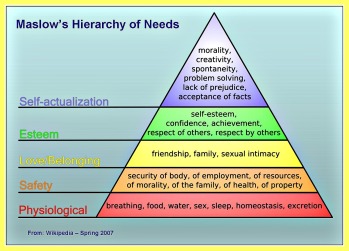
Maslow-HierarchyREVThe excitement we feel in attaining them is somewhat short-lived. As time goes by that initial thrill wanes and they’re replaced with a yearning for the next desire.

The American psychologist Abraham Maslow devised the Hierarchy of Needs. This five level pyramid begins at the bottom with the most basic needs and moves upward toward the final level that he calls self-actualization. It is here that honesty, independence, awareness, objectivity, creativity, and originality reside. 

Maslow’s theory is that only a minority of people are able to self-actualize because it requires these more uncommon qualities.

Needs are those things we must have to live healthy, functional lives. Food, water, and shelter are the obvious physical or objective ones. They remain constant over time. Subjective needs refer to those necessary for good mental health: self-esteem, approval, and a sense of security. 

The ability to differentiate between the two is important in how we prioritize and make choices in everyday life. We’re also better equipped to recognize this ability, or a lack thereof, in other people.  


Self-love

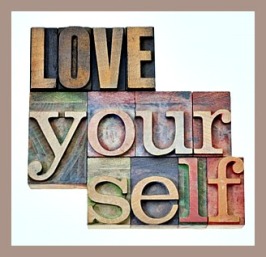
 Self-love is the act of valuing your own happiness and well-being. When we see ourselves as worthy of kindness and compassion, we more easily view others in the same way. 

Love Yourself REVAs an important component of self-esteem, it enables us to have confidence and a positive self-image.

Without it, we feel the need to constantly “measure up” to self-imposed and societal standards. If that doesn’t happen then we feel like failures, unworthy of respect for ourselves and others. 

This challenge is based on the work of Brené Brown, a research professor at the University of Houston. She tells us that self-love is our birthright, that we aren’t required to earn it, but we must believe in it. 

That can be a tall task in today’s world. The race to be smarter, younger-looking, healthier, richer, thinner, etc. is overwhelming. We’re barraged with products and services that can “improve” and make us more successful. 

I followed Niki’s instructions to watch for moments when I didn’t feel good about myself. There were several times throughout the past week and all for different reasons.

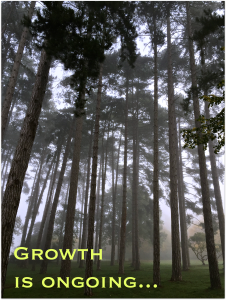
GrowthREVHowever, I came up with a positive, simple mantra to remind myself that we should always exercise kindness towards ourselves and others. 

“Growth is ongoing…”

Changing negative behaviors requires diligence and strength, but we must first be aware of the behavior.

Once we identify these unfavorable attitudes towards ourselves we must remember that only through growth can we change.

We always have the opportunity for self-improvement; growth is ongoing as long as we want it to be!

Cultivating self-love requires attention and practice. This will be my focus and hopefully, the moments of negativity will dissipate. The goal is to replace it with a spirit of kindness and caring, not only for myself but others as well!

Week 1 | Self-Love