Who is Your Kindness Role Model?

Inspiring Life.pngDear Grandma,

As an exercise in recognizing people who inspire kindness, I decided to write a letter to a role model and immediately thought of you.

Your 4 ft. 8 in. frame belied the giant that you truly were. For the 36 years that we spent together, your spirit of generosity and sacrifice never ceased to amaze me. 

As far back as I can remember, you were the happiest when giving to others. Whether it was financial assistance or help of some other kind, you were the first to step up and offer. Your Christian faith and love for God motivated your charitable nature.

I also remember what a hard worker you were. With only a sixth-grade education you had to leave school and go to work as domestic help for more well-to-do households. The money you earned was turned over to your parents to help with expenses for a large, but impoverished German family.

Elderly HandsREV

You cleaned, scrubbed, and provided childcare for others and then came home and did some more. You ran errands that involved walking long distances in all kinds of weather. You had to grow up before your time and missed out on the joys of being a kid.

This kind of menial labor continued until you retired at 65. 

Your hands were the reflection of this lifetime of hard work. No smooth, soft skin or manicured nails. No jewelry. Just rough-hewn palms and translucent skin, mottled with age spots and a lacework of veins.  

I recall these hands clearly. Smallish, yet capable of so much. From kneading floured dough to fixing my broken toys to pointing out the Bible verses as I followed along.

You didn’t earn much money but managed to save most of it. You lived simply and wasted nothing, repurposing long before it became fashionable. Clothes and cars were second-hand, but your treatment of others was first-rate. You had very little in the way of material possessions, yet you wanted for nothing.

Despite the many hardships you never became bitter. It’s easy to show kindness and generosity when life has been good. But, it’s not as simple when life has been harsh. We tend to look at others and wonder why we don’t have the same opportunities. 

Gratitude

I never heard you complain about any aspect of your life. Your attitude of gratitude was nothing short of amazing, which is why I consider you a true role model.

I’ve learned to appreciate the basic necessities of life without always wanting something more. You taught me this. I feel sorry for those who define themselves by their material possessions. You explained that they’re trying to fill up the emptiness inside and even the best, most luxurious brands can’t do that.

You always took pride in your work and reminded me that no matter what the job is we should always do our best. 

Your advice was to try to help others whenever possible and always with a smile. I may not be able to give in large ways, but I try to give in a lot of small ways.

The lessons in kindness, generosity, and humility that you always taught by example shaped the very best parts of me and I’ll be forever grateful…thankful for your love and all that you gave with such a caring heart.

I miss you a lot and hope that you’re proud of my efforts as a daughter, mother, and friend. I try to give my best to all the people in my life, just as you did in yours.

With much love & gratitude…xoxoxo


Revised & reposted from 2017

Weekend Coffee Share | Self-Acceptance

Weekend Coffee ShareIf we were having coffee this weekend I’d ask you whether self-acceptance comes easy for you.

Because it’s something many people struggle with. We often feel dissatisfied in our lives; constantly questioning the choices we make, or comparing ourselves to others. 

It may be a negative voice from our childhoods reminding us of what we’ve done wrong. Oftentimes it’s the assault of advertisements for products to help us become “new and improved” with the underlying message that we’re not good enough as we are.

Hindsight bias is an especially cruel dictator. It’s easy to see a situation more clearly once we know the actual outcome of one choice over another. Yet we criticize ourselves for not being a bit more psychic.

We’ve been groomed to feel like failures if we can’t achieve perfection, something completely unattainable. People who aspire to be perfect are often hiding some type of shame and attempting to mitigate judgment from others. 

But, it’s important to remember that perfectionism isn’t the same thing as striving to be our best selves. The various skills we acquire throughout life are divided into two types:

  • Hard skills are easily measurable (reading, math, computer coding, etc.)
  • Soft skills are harder to quantify (proper etiquette, active listening, getting along with others, etc.)

Both hard and soft skills are improved with training, but require honest self-examination to pinpoint areas that need work. Once these are identified we must study and practice change. Depending on what soft skills are lacking, the situation may require therapy with a professional.

It’s no wonder that self-acceptance is so hard! 

 Self CompassionOne helpful way to be more accepting of yourself is to list a few positive character traits. Then consider things you do that don’t fit those traits and why:

  • Patience
  • Empathy

When it comes to patience I have plenty to offer other people. I’m able to recognize their strengths and weaknesses and quickly remind myself that no one is perfect. 

But, sometimes I forget to do this for myself: I didn’t think it through, I should’ve known better, I could’ve prevented this, or I would’ve done better if I had tried harder. 

Rather than recognizing that some things are simply out of our control, I berate myself for being human.

Likewise, I’m quick to empathize with others. I listen intently to their problem and try to offer reassurance that things will work out. I remind them of their limitations and the fact that they can’t predict ahead of time how things will turn out.

Regrettably, I forget to exercise this same care with myself.


Accept_Thich

I’ve gotten much better in recent years after leaving a toxic relationship that reinforced negativity and feelings of incompetence.

Showing kindness to yourself is difficult, especially when you’re on the receiving end of abuse.

The road to recovery is ongoing. I returned to school in 2009 and earned a degree while working full-time. I also made some hard choices that required a lot of courage and big changes that depended upon faith in myself.

It wasn’t easy, but I knew that finding peace would require a major transformation in my life. And I knew it would take time. 

Today, I treat myself with more kindness and acceptance than ever before. Thankfully, this enables me to treat others in the same way!


Weekend Coffee Share | Compassion

Weekend Coffee ShareIf we were having coffee this weekend I’d ask you whether you think our world could use more compassion.

I certainly do. 

I’m amazed by daily reports of abuse and neglect, particularly against the most vulnerable in our societies. 

Compassion is feeling sympathy for someone who is stricken by misfortune with a desire to alleviate the suffering.

Regardless of whether that person is you or someone else, three things are necessary for compassion:

  1. You must recognize the suffering
  2. You must feel moved and want to help
  3. You realize the common humanity in suffering

Recognize suffering

It’s easy to recognize suffering if there are outward signs, but many people hide their anguish for a variety of reasons.

And sometimes we don’t recognize it in ourselves, either. We often confuse sadness and anger when they can be one and the same. 

This was something I discovered after enduring a long-term, verbally abusive marriage. I was extremely angry at the way my spouse treated me, but didn’t realize the feelings of outrage were interlaced with great sadness. 

With some therapy and a lot of helpful books, I was able to develop a better awareness of my own feelings and how they dictated my behavior. I learned about Emotional Intelligence (EI), which is the capacity to be aware of, control, and express one’s emotions, and to handle interpersonal relationships carefully with insight and sensitivity.

It’s taken a lot of self-reflection and work, but I score much better today on EI measurements. Also known as emotional quotient (EQ), Justin Bariso, author of EQ Applied, researched for two years what emotional intelligence looks like. He composed a list of 13 signs of high EI. It’s an easy read in case you’re wondering how many you possess.

Feel empathy

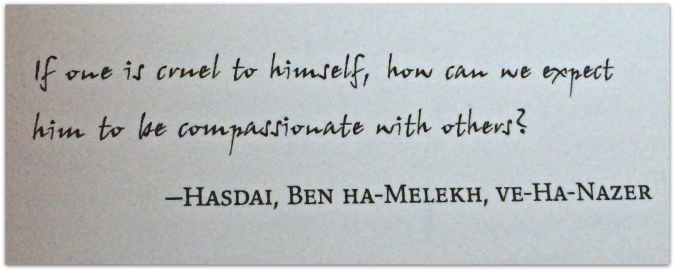
This is easy for me when it comes to other people. I’ve always been empathetic and sometimes to my own detriment. This is a hallmark of codependence; putting other people’s needs first because you feel sorry for them. But, what about yourself?

Unfortunately, I didn’t realize that showing empathy to ourselves is a sign of good mental health. Instead, I’d listen to my inner critic, which is always quick to point out weaknesses and failures. Compassion was something I saved for others, not realizing how much I needed it, myself.

Once I began to practice self-compassion I found a sense of peace. A calm mind allows for thoughts and feelings to flow freely with a clarity that doesn’t hide or distort the truth.

Self Compassion 2

Realize normal vs undue suffering

This one is a bit more complicated. Yes, everyone suffers at times. But, at the hands of an abuser, you mistakenly think that you deserve the pain; that you’ve done something to warrant the criticism and put-downs. Essentially, I could look at other abused people and feel sorry for them, but not myself. 

It’s a strange concept now that I’ve healed from those years of malicious treatment. If only I had cared for myself back then the way that I do today. I would’ve salvaged so much time and self-esteem. However, I’m grateful that I got out of that toxic environment with a much better appreciation for myself.


I still have moments where I doubt my abilities. But, I recognize this as a human condition that everyone feels at times. 

The difference now is that I’m aware when those feelings strike. I’ve learned to counter the fear and doubt by using positive self-talk.  

I’ve learned to treat myself the way that I’d treat a loved one; with care and compassion. I focus on my strengths and allow for the weaknesses. If I fail at something I encourage myself to try again. 

Because of all that I’ve learned, I’m able to be my own best friend. And that helps me be a better friend to others! 


Revised & reposted from 2017